How to Choose a Diablo Robot Kit for Development Projects
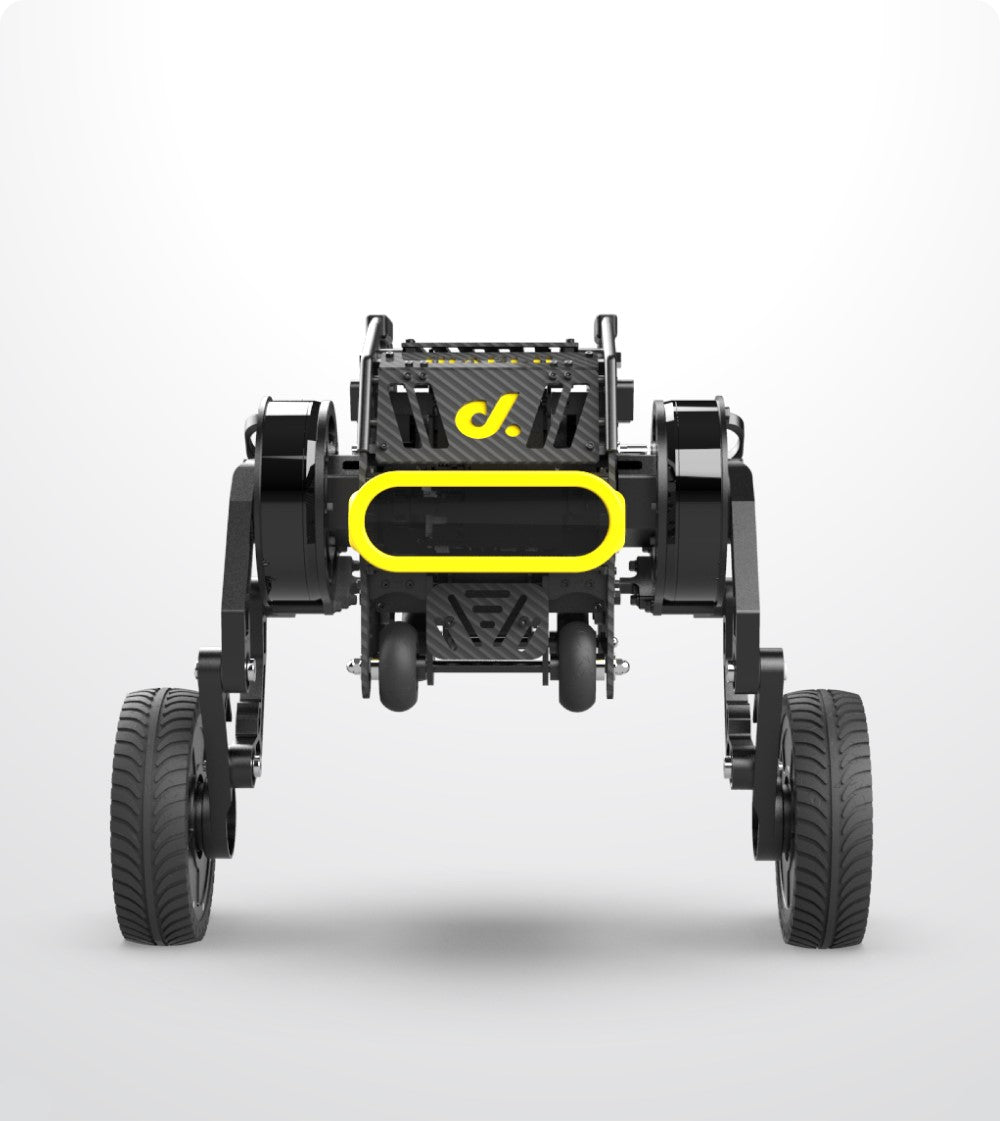
A Diablo robot kit should be selected according to project requirements, including motion type, payload, software support, sensor expansion, and control flexibility. Developers should compare factors such as actuator performance, battery life, SDK availability, and compatibility with robotics frameworks. A suitable platform can reduce development time by 30–50% and support applications from education to autonomous robotics research.
Selecting a Diablo robot kit for a development project requires a clear understanding of what the robot will be used for. A research team building autonomous walking algorithms may need open control access and sensor integration, while an engineering team creating a mobile inspection system may focus more on stability, payload, and operating time.
The first step is matching the robot platform with the development goal. Many robotics projects fail to progress because the hardware does not support later software expansion. A robot that only performs basic movement may become unsuitable when developers add cameras, LiDAR, or artificial intelligence models.
A development robot should provide enough hardware access for testing, modification, and integration. A platform that supports both basic programming and advanced control development usually has a longer usable period.
The mechanical structure determines how the robot performs in different environments. Developers should examine the number of joints, actuator quality, movement accuracy, and balance control. Legged robots are often selected for research because they can move across uneven surfaces where traditional wheeled systems may have limitations.
For example, a quadruped robot with multiple degrees of freedom can adjust its posture during walking, climbing, or turning. However, more joints also require more complex control algorithms. Projects using reinforcement learning or motion planning often need precise actuator feedback and high-frequency communication.
Important hardware specifications include:
| Specification | Recommended Consideration |
|---|---|
| Degrees of freedom | Higher DOF allows more flexible movement |
| Payload capacity | Determines additional sensor and computer options |
| Battery duration | Affects testing time and field operation |
| Motor response | Influences movement accuracy |
| Frame materials | Affects durability and weight |
A difference of only 10–20% in actuator response speed or battery capacity can affect how long a robot can collect usable testing data. For development projects lasting several months or years, hardware flexibility is usually more important than only comparing initial specifications.
The software environment is another major part of robot selection. Modern robotics development depends heavily on APIs, simulation tools, and programming support. Developers should check whether the robot allows access to low-level control commands instead of only providing preset functions.
Many university and industrial robotics projects use platforms compatible with ROS or similar frameworks. ROS was first released in 2007 and has become widely used for robot communication, navigation, and sensor processing. A compatible robot can reduce the time required to connect cameras, mapping systems, and artificial intelligence applications.
The software features developers should review include:
-
SDK availability for custom applications;
-
Python and C++ programming support;
-
Real-time control interfaces;
-
Simulation environment compatibility;
-
Sensor data access.
A robot platform with open software tools allows developers to test different approaches without replacing the hardware. This is especially useful for projects involving computer vision, autonomous navigation, or machine learning.
Sensor expansion is another factor when choosing a development platform. A basic robot may only include motion sensors, but advanced projects often require additional devices. Autonomous systems commonly combine IMU, depth cameras, LiDAR, GPS, and other sensors to improve environmental understanding.
For example, an inspection robot may require a high-resolution camera and thermal sensor, while a research platform for navigation algorithms may need LiDAR and accurate positioning data. Developers should check available ports, communication protocols, and mounting options before purchasing.
A robot designed for development should allow additional hardware to be added without major mechanical changes.
The Direct Drive Diablo collection provides different robot solutions designed for developers who need programmable platforms with expansion possibilities. More information about available models can be found through the Direct Drive Diablo collection.
Computing capability should also match the software requirements. Artificial intelligence applications often require more processing power than basic robotic control. Object detection, mapping, and deep learning models may require external computers or embedded AI modules.
Developers should evaluate:
| Computing Requirement | Application Example |
|---|---|
| Low-power controller | Basic movement control |
| Embedded computer | Sensor processing and simple AI |
| GPU-supported system | Deep learning and computer vision |
| External workstation connection | Advanced research algorithms |
A project using neural network-based perception may require significantly more computing resources than a simple remote-controlled robot. Selecting a platform with flexible computing options prevents limitations during later development stages.
Cost planning should include more than the robot itself. Development projects often require additional equipment, software testing, replacement parts, and sensors. A robot with a lower initial price but poor expansion support may require additional replacement costs later.
A practical evaluation can include:
| Category | Questions |
|---|---|
| Project type | Research, education, inspection, or commercial development? |
| Environment | Indoor, outdoor, flat ground, or complex terrain? |
| Software needs | Basic programming or advanced algorithms? |
| Hardware upgrades | Additional sensors or computing modules? |
| Support resources | Documentation, SDK, and developer community? |
The expected development timeline should also influence the choice. A short educational project may prioritize easy programming, while a multi-year research program may require hardware that supports continuous modification.
Robot testing data can also help evaluate suitability. Developers should measure walking stability, response time, power consumption, and sensor accuracy during early trials. For example, recording performance over 50–100 operation cycles can reveal whether the platform meets project requirements.
Small differences in control accuracy, communication speed, and mechanical stability often become more noticeable during long-term development.
Reliability is another consideration for professional robotics projects. A robot used for repeated testing needs consistent performance. Factors such as motor temperature, battery aging, and software stability should be monitored during development.
Many robotics teams spend 20–40% of project time on system integration rather than algorithm design. A platform with better documentation and easier hardware access can reduce this time and allow developers to focus more on application development.
The best Diablo robot kit depends on the balance between mechanical design, software flexibility, sensor support, and future expansion. Developers should select a platform that fits current requirements while leaving enough room for new sensors, algorithms, and application scenarios as the project develops.