What Utilities Are Needed to Operate a Brewhouse?
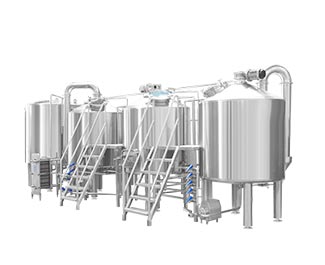
A brewhouse needs potable and process water, heat, electricity, refrigeration, glycol, compressed air, CO₂, drainage, ventilation, and cleaning utilities. In the Brewers Association’s 2016 benchmarking data, breweries producing 10,000–100,000 barrels per year reported median water use of 5.3 barrels per barrel of beer, electricity use of 22.4 kWh/bbl, natural-gas use of 1.8 therm/bbl, and CO₂ use of 7.9 lb/bbl. Utility systems should therefore be sized around simultaneous production demand, not vessel capacity alone. A 20-bbl brewhouse running three turns per day can place very different demands on boilers, chillers, water storage, and drains than the same brewhouse producing one batch.
Water planning starts with more than recipe water. Mash liquor, sparge water, vessel rinsing, CIP, floor washing, packaging, and wort cooling can all draw from the same supply within a short operating period. Brewers Association benchmarking from 2016 found a median water-to-beer ratio of 5.3:1 among 26 breweries producing 10,000–100,000 bbl annually; the upper-efficiency group operated between 3.3:1 and 4.0:1.
For a 10-bbl finished batch, a 5.3:1 ratio represents about 53 barrels of total facility water, or roughly 1,643 US gallons. Not all of that volume enters the beer. Cleaning, cooling, losses, and sanitation account for a large share, so inlet pipe diameter and instantaneous flow can matter as much as daily consumption.
Water treatment depends on the source analysis. Carbon filtration is commonly used where chlorine or chloramine removal is required, while softening or reverse osmosis may be appropriate where hardness, alkalinity, or dissolved minerals are unsuitable for the intended beer profile. Calcium, chloride, sulfate, bicarbonate, sodium, magnesium, and pH should be measured before treatment equipment is specified.
A water system capable of supplying 2,000 gallons per day may still slow production if it cannot supply enough gallons per minute during mash-in, tank rinsing, and CIP at the same time.
Hot-water storage reduces the need to wait for water to heat between brewing steps. On a brewhouse performing two or three turns during an 8–12 hour production day, the hot-liquor tank must support strike water, sparge requirements, cleaning demand, and recovery of warm water from the wort heat exchanger without overflowing or running empty.
Heating comes next because mash temperature and wort boiling place concentrated energy demand on the plant. Steam, natural gas, and electric elements are common choices. Brewers Association guidance has reported typical electrical consumption around 12–22 kWh per barrel and thermal natural-gas consumption around 1.3–1.5 therms per barrel across breweries, although actual use varies with scale and equipment.
| Utility | Practical sizing input | Useful reference range |
|---|---|---|
| Water | Batch volume, CIP, cooling, packaging | 3.3–9.9 bbl water/bbl beer in the 2016 BA sample |
| Electricity | Motors, refrigeration, controls, packaging | 12–22 kWh/bbl |
| Natural gas | Kettle, HLT, steam production | 1.3–1.5 therm/bbl |
| CO₂ | Purging, transfers, carbonation, packaging | 2016 median: 7.9 lb/bbl |
| Refrigeration | Knock-out, fermentation, cold conditioning | Calculated from peak simultaneous cooling demand |
Steam systems work well when several vessels need heat because one boiler can serve kettle jackets, mash vessels, hot-water production, and some CIP installations. Boiler rating still needs to account for warm-up rate. Heating 20 barrels of wort quickly requires more steam per hour than allowing the same volume twice as much time to reach boiling temperature.
Electric systems remove the need for a steam boiler but move more demand onto the electrical service. A brewery considering electric micro brewery equipment should verify incoming voltage, three-phase availability, breaker capacity, conductor sizes, and spare panel capacity before selecting heating elements. Adding fermentation tanks later usually adds refrigeration and pumping demand as well.
Electrical planning should include every motor and resistance-heating device, not only the brewhouse control panel. Pumps, agitators, glycol compressors, glycol circulation pumps, air compressors, cold rooms, keg washers, canning machines, lighting, laboratory equipment, and HVAC can operate during the same shift. A 2016 Brewers Association sample of 28 breweries in the 10,000–100,000 bbl range reported median electricity use of 22.4 kWh/bbl.
Motor startup also deserves attention because compressor and pump starting current can exceed normal running current for a short period. Variable-frequency drives can reduce abrupt motor starts and allow pump flow to match process requirements, but electrical service should still be designed from equipment nameplate data rather than annual kWh estimates.
After boiling, energy planning changes from adding heat to removing it. A plate heat exchanger normally cools wort on the way to the fermenter, using cold water in one stage or water followed by glycol or chilled water in a second stage. Incoming summer water temperature may therefore alter wort cooling performance even when the heat exchanger itself has not changed.
A brewer cooling 20 bbl instead of 10 bbl in the same transfer time roughly doubles the heat that must be removed per hour, assuming similar inlet and outlet temperatures. Increasing batch size without reviewing the heat exchanger, cooling-water flow, glycol temperature, and chiller capacity can lengthen knock-out and delay yeast pitching.
Chiller selection should be based on BTU/h or kW of cooling required during the busiest cooling period, including wort transfer, active fermentation, tank temperature maintenance, and planned cold crashing.
Cellar refrigeration can become more demanding as tank count increases. One fermenter holding steady at 68°F requires far less cooling at a given moment than several tanks being brought close to 32–35°F. A 2026 brewery adding four fermentation vessels should therefore check simultaneous cooling demand rather than simply adding their total barrel capacity to the chiller specification.
Glycol piping also affects usable refrigeration. Insulated supply and return lines reduce unwanted heat gain and condensation, while pipe diameter influences circulation flow and pressure loss. Long runs and many elbows can reduce available flow at distant tanks, so pump selection should reflect the full piping layout rather than chiller outlet size alone.
Compressed air is smaller in energy terms but may stop automated equipment when supply pressure falls. Pneumatic butterfly valves, actuators, keg washers, fillers, and packaging machines can share the same compressor. A receiver tank helps cover brief peaks, while filters and dryers reduce moisture, oil, and particles where cleaner compressed air is required.
CO₂ demand rises after fermentation because breweries use it for tank purging, transfers, carbonation, kegging, and packaging. In the Brewers Association’s 2016 sample of 17 breweries producing 10,000–100,000 bbl per year, median CO₂ consumption was 7.9 lb/bbl; the lowest-use quartile ranged from 2.6 to 6.9 lb/bbl.
CO₂ storage and ventilation should be considered together. Gas released from tanks, packaging equipment, or fittings can accumulate in enclosed rooms because CO₂ is heavier than surrounding air. OSHA lists a permissible exposure limit of 5,000 ppm as an 8-hour time-weighted concentration, while the referenced short-term limit shown in OSHA’s annotated table is 30,000 ppm.
Fixed CO₂ monitors are therefore commonly considered around fermentation rooms, cold rooms, packaging areas, and bulk-gas installations where releases could collect. Detector placement should follow the manufacturer’s instructions and applicable local requirements; ventilation capacity should be based on the room and gas-storage arrangement rather than brewery production volume alone.
Drainage has to accept the water that brewing equipment releases in minutes, not only the total discharged during a day. Tank rinses, CIP returns, hose cleaning, kettle washdown, and accidental spills may occur close together. Floor slopes, trench-drain width, outlet diameter, and sewer capacity should be established before vessels are permanently positioned.
Brewing wastewater can also carry yeast, trub, sugars, beer, cleaning chemicals, and suspended solids. Brewers Association resources updated in 2026 continue to treat water use and wastewater disposal as major operating issues for craft breweries and recommend managing higher-strength material separately where practical.
CIP connects water, heat, chemicals, pumps, and drainage in one operation. Cleaning quality depends on chemical concentration, temperature, contact time, and mechanical circulation. Oversized tanks are not automatically easier to clean: spray devices and return pumps need enough flow to wet surfaces and carry soil away throughout the cycle.
A brewery running three batches per day can spend several additional hours cleaning the mash vessel, kettle, whirlpool, fermenters, hoses, and transfer lines. Recovering final rinse water where local practice permits, separating high-strength product waste, and scheduling CIP to avoid simultaneous hot-water demand can reduce unnecessary water and heating use.
Ventilation completes the wet side of the utility plan. Wort boiling releases water vapor, and boilers, compressors, motors, and refrigeration equipment release heat into the building. Exhaust design should remove kettle vapor without creating excessive negative pressure, while replacement air should be considered when large exhaust fans operate for several hours.
Space planning should leave access to pumps, glycol headers, steam traps, valves, filters, electrical panels, and drains after tanks are installed. A brewery built around a 10-bbl system may later add 20-bbl or 30-bbl fermenters; spare electrical capacity, larger utility headers, and additional glycol connections usually cost less to install before production begins than after floors and walls are complete.
The utilities also need to be evaluated together rather than purchased independently. Faster heating can shorten brew time, but faster production may increase hourly water demand and create another fermentation batch that the existing chiller must cool. Adding a faster canning line may increase compressed-air, CO₂, electricity, and cold-storage demand during the same 8-hour shift.
For equipment specification, the useful design document is a utility schedule showing required voltage, amperage, steam pressure, steam mass flow, water pressure, water flow, glycol supply temperature, glycol flow, compressed-air pressure, CO₂ pressure, gas consumption, and drain discharge for every major machine. Peak simultaneous demand should be calculated from the actual brewing schedule, with spare capacity assigned according to realistic expansion plans rather than an arbitrary percentage.